Beginning Farmers: Learning, Networking, and Connecting to Place
February 8, 2013 § 1 Comment
Check out the article (title above) that I wrote for A Growing Culture! Here’s a link, with the first couple of paragraphs below:
It’s no secret that more and more young people in the U.S. are looking to establish careers in local, organic, and small-scale farming, despite the risk, instability, hard work, and moderate income. Even many well-established career adults are abandoning their corporate jobs to start farms – and writing books about it. Most of these folks are unapologetic about their choices, choosing instead to either shout to the rooftops about why they’ve chosen a lifestyle such as this one, or to quietly go on doing what’s important to them. Yet as much as farmers enjoy their independence, getting started and continuing successfully depends upon a network of support from other farmers, researchers, landowners, and the general public.
Khaiti and Andrew French, who run Living the Dream Farm in Clayton, Wisconsin, were drawn to farming because “of loving good, real food and caring about how animals are raised in agriculture.” They are famous for their duck eggs in Minneapolis circles, and also raise turkeys, rabbits, chickens, and goats. Farmers such as the Frenches, inspired by voices such as Wendell Berry and Fred Kirschenmann, seek meaningful connection to the land, family-centric lifestyles, and practices that are in line with their carefully considered ethics.
Conflict and resolve
June 22, 2012 § Leave a comment
“The most tragic conflict in the history of conservation is that between the conservationists and the farmers and ranchers. It is tragic because it is unnecessary. There is no irresolvable conflict here, but the conflict that exists can be resolved only on the basis of a common understanding of good practice. Here again we need to foster and study working models: farms and ranches that are knowledgeably striving to bring economic practice into line with ecological reality, and local food economies in which consumers conscientiously support the best land stewardship.” – Wendell Berry, “Hope,” The Fatal Harvest Reader
* * * * *
I just want to add: yes. And you know, as far as we have to go, in my experience there are already many moving in this direction. Berry’s essay was published in 2002. Ten years later, I’ve come across an encouraging number of farmers who want to work with conservationists, and conservationists who are working to understand the needs of farmers. Have we adequately defined “a common understanding of good practice”? Oh, no. That will long be a conversation in progress, a dynamic and region-specific process. But to begin to agree on some fundamental principles of good practice, alongside an awareness of what humans need to survive both in the present and long-term, is a foundation that, I think, many have begun to build. And we’ll keep on building it, as more and more of us realize that we must.
Handmade Shop: Green Trunk Designs
May 30, 2012 § 3 Comments
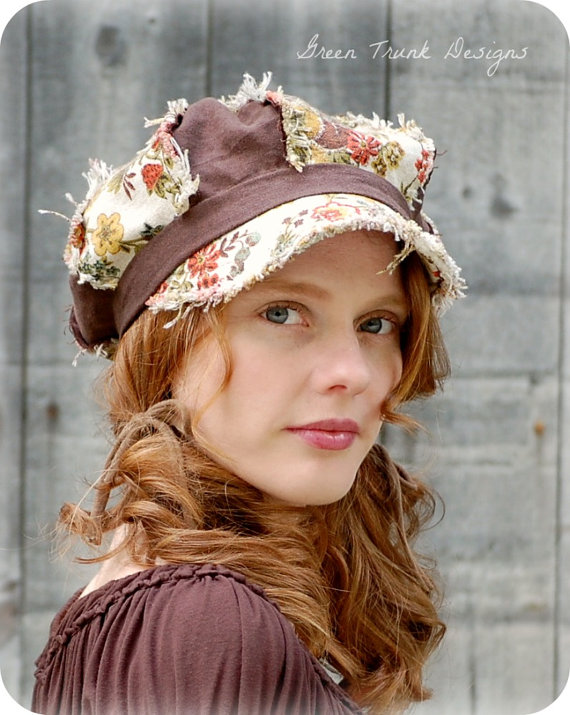
Is it just me, or are we having a revival of the creative? I feel like I’ve been noticing a general pulling away from what is mass-produced in favor of what has been made by hand. We are, many of us, being drawn towards things that are authentic, repurposed, inventive, and unique. This is happening in our own lives in DIY ways, and it’s showing up in a great flush of independent, locally-made, handicraft kinds of businesses.
I love this. I have always loved the idea of cottage industries and often fancied I’d have one. (I still fancy this, actually, along with the cottage itself.) I remember learning about the Industrial Revolution with dismay, though this may have been related to simultaneously reading a good deal of Charles Dickens. The disappearance of cottage industries with the rise of factories and migration to cities did not seem especially progressive to me, when my aesthetic tendencies would have me prefer thatched houses to dank, crowded alleys and smoggy skylines.
I suppose factories may have their place, and some have been intentional about incorporating pleasant and safe conditions within their operations. But I still prefer items that have been handmade. Something a human touched and created with a vision in mind, with care and detail emphasized over speed. Something that grew out of someone’s desire to make something beautiful and useful.
So! I’d like to share with you one small business I have discovered thanks to Etsy. These hats by Green Trunk Designs are made from recycled materials and have a distinctly vintage flair. Owner Jaya Lee crafts each hat or fascinator from her home in Brewster, New York; she finds “great joy in giving unwanted materials a new life and purpose.” Have a look at some of these unique, pretty creations. Photos courtesy of Green Trunk Designs.
Vintage 1920s Lace Cap

Rustic Rose Woodland Hair Comb

Felt Pillbox Hat

Patchwork Fascinator Hat

Woodland Cloche Hat
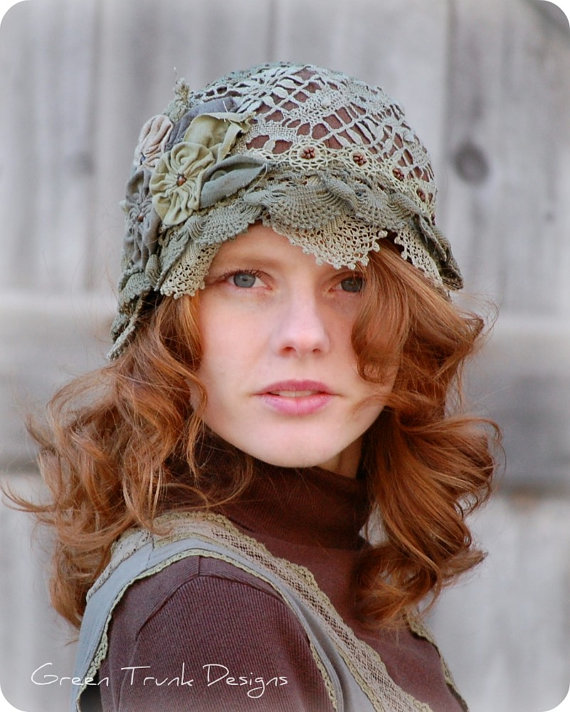
What do you think? Aren’t they charming? If I were to choose one of these, I think it would be the vintage 1920s lace cap. Which one do you like best?
 Kinds of Honey
