Muddy water morning
June 28, 2015 § Leave a comment
Summer is so much intensity. Heat, people, pouring sunshine, gardens demanding water and weeding, animals thirsty and shade-seeking.
There is great fun in summer – brightness, discovery, and a raucous kind of play, play, play outside! But it also comes with a push that, for some of us, needs to be ducked away from now and again.

Sunday mornings become the place to find cool and quiet.
This one was a slow walk in tall boots, a slight breeze, moss and muddy water at the lake’s edge.


Sometimes you have to look for what you need, to remember your right to it, to find the space and the time somewhere in the week for a place beautiful and damp and cool and still.
Having a jar of coffee in hand doesn’t hurt. A companion happy to splash in the water doesn’t, either.
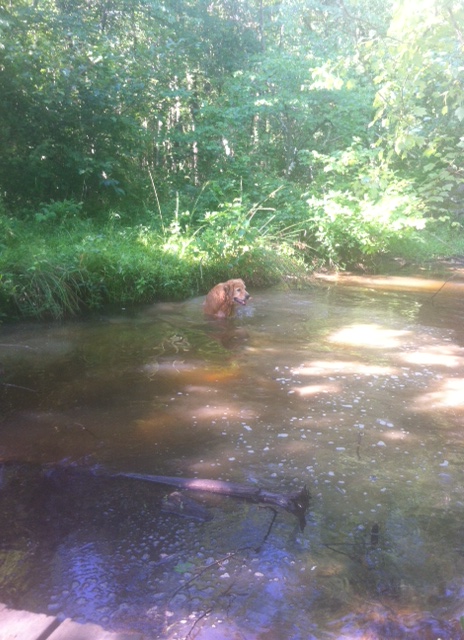

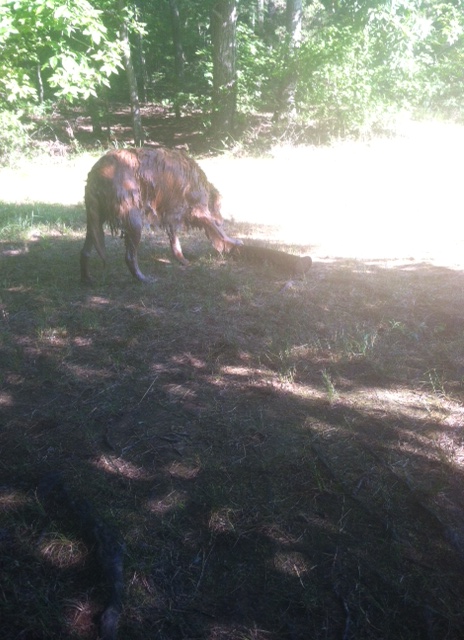
This Sunday prayer seems to be hanging in the air around me. A Creator’s creation offering what I need: trees bending in the breeze, scattered sun over the water, and the soaking-wet, frolicking gladness of a good dog.
What might not?
June 21, 2012 § 1 Comment
“If seeds in the black earth can turn into such beautiful roses, what might not the heart of man become in its long journey toward the stars?” – G.K. Chesterton
In the spring
March 23, 2012 § 1 Comment
“In the spring, at the end of the day, you should smell like dirt.” – Margaret Atwood
More thoughts on dirt: art from the soil
January 27, 2012 § Leave a comment

Masaccio: The Tribute Money
The fresco painters of the Italian Renaissance found themselves in a peculiar position with respect to color. They had available to them a large number of vegetable- and mineral-derived pigments, but the technique of fresco (that is, working on wet plaster) limited them largely to the earth’s palette, because the alkali in the plaster tended to decompose and disperse the vegetable-based dyes. The very rich colors of Masaccio’s frescoes are almost all derived directly from the soil. The reds, browns, and yellows are from ochre. The green is from a reduced clay called terre verte. The umber came straight from the earth of Sienna. The whole Christian drama is expressed in the colors of the earth.
– William Bryant Logan, Dirt: The Ecstatic Skin of the Earth
 Kinds of Honey