Good old-fashioned marketing
April 4, 2012 § 2 Comments
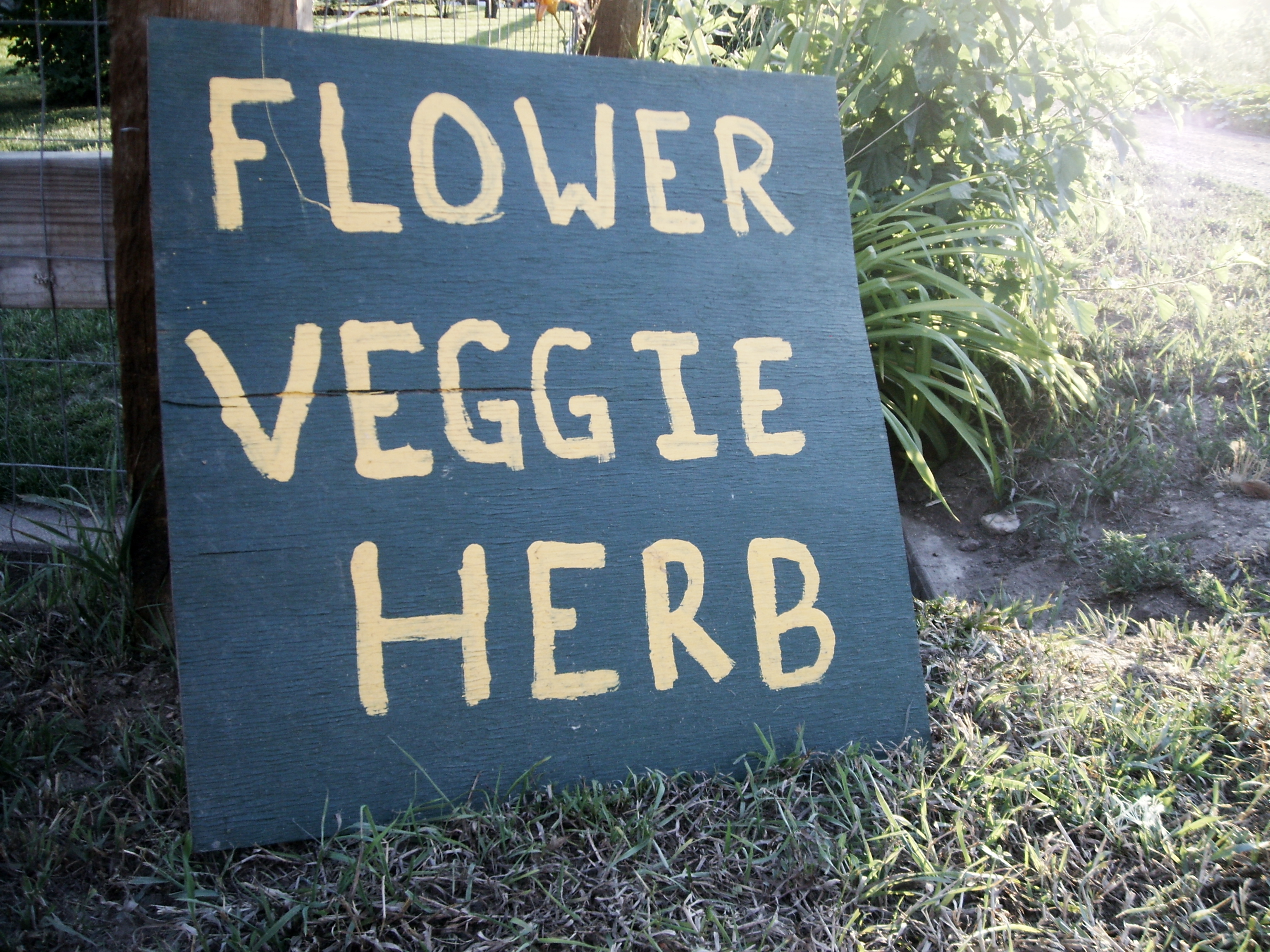
This sign is from Sol y Sombra Farm, where I worked from June to November last year. Isn’t there something perfectly nice about a wooden hand-painted sign propped out along a fence in front of the farm? There’s a touch of humanity in it; someone here made this and wants you to know what they have here for you. And on a farm, those can be very good things. To see some of last year’s harvest, have a look here.
Sol y Sombra is a CSA in Boulder County, with a lot happening on a few acres. I’m thinking about Allison and her new crew at Sol y Sombra, as flowers, veggies, and herbs just start to become available. Wishing you all well!
On prairie
April 4, 2012 § Leave a comment
Jump on over to The Prairie Ecologist to read a guest essay by Doug Ladd, Director of Conservation Science for the Nature Conservancy of Missouri. Here’s an excerpt from his essay, reprinted there, entitled “Why Prairie Matters”:
To visit a prairie is to be immersed in the result of thousands of generations of competition and natural selection resulting in a dynamic array of diversity, which, collectively, is supremely attuned to this uniquely midcontinental landscape.
Here flourish long-lived, deep-rooted perennial plants annealed by the frequent Native American fires, searing summer droughts, frigid winters, episodes of intensive grazing and trampling, and rapid, recurrent freeze-thaw cycles that exemplify the Midwest. These plants in all their varied magnificence in turn support myriad animals ranging from minute prairie leafhoppers that spend their entire lives in a few square meters to wide-ranging mammals and birds that travel hundreds or even thousands of miles in a season.
Prairie matters beyond the prairies themselves.
(Read on! Read on. We must be thinking about these things. And then, hopefully, carefully, acting.)
In the spring
March 23, 2012 § 1 Comment
“In the spring, at the end of the day, you should smell like dirt.” – Margaret Atwood
Greening
March 22, 2012 § Leave a comment
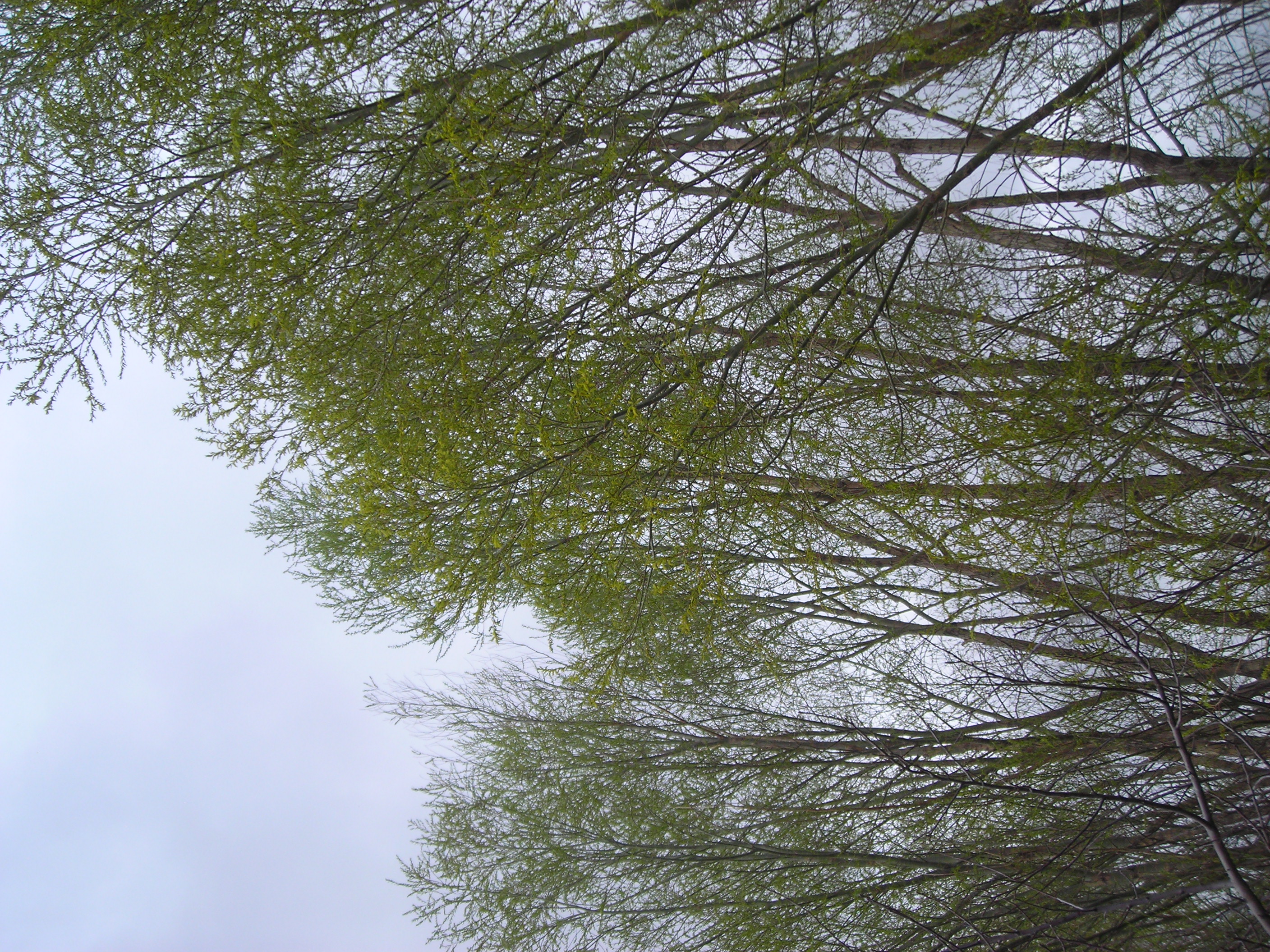
In Iowa March usually thaws and snows. Thaws a hesitant little and snows a whole lot. Then thaws with a bit more confidence, to be set back perhaps with another storm or two. Doesn’t it? I keep waiting for the freak blizzard (which really isn’t freak) and yet it doesn’t come. This year March has surprised us with a steady stretch of 80-degree days. Follow that with mild/warm temperatures, overcast skies, and intermittent rains.
The world greens quickly.
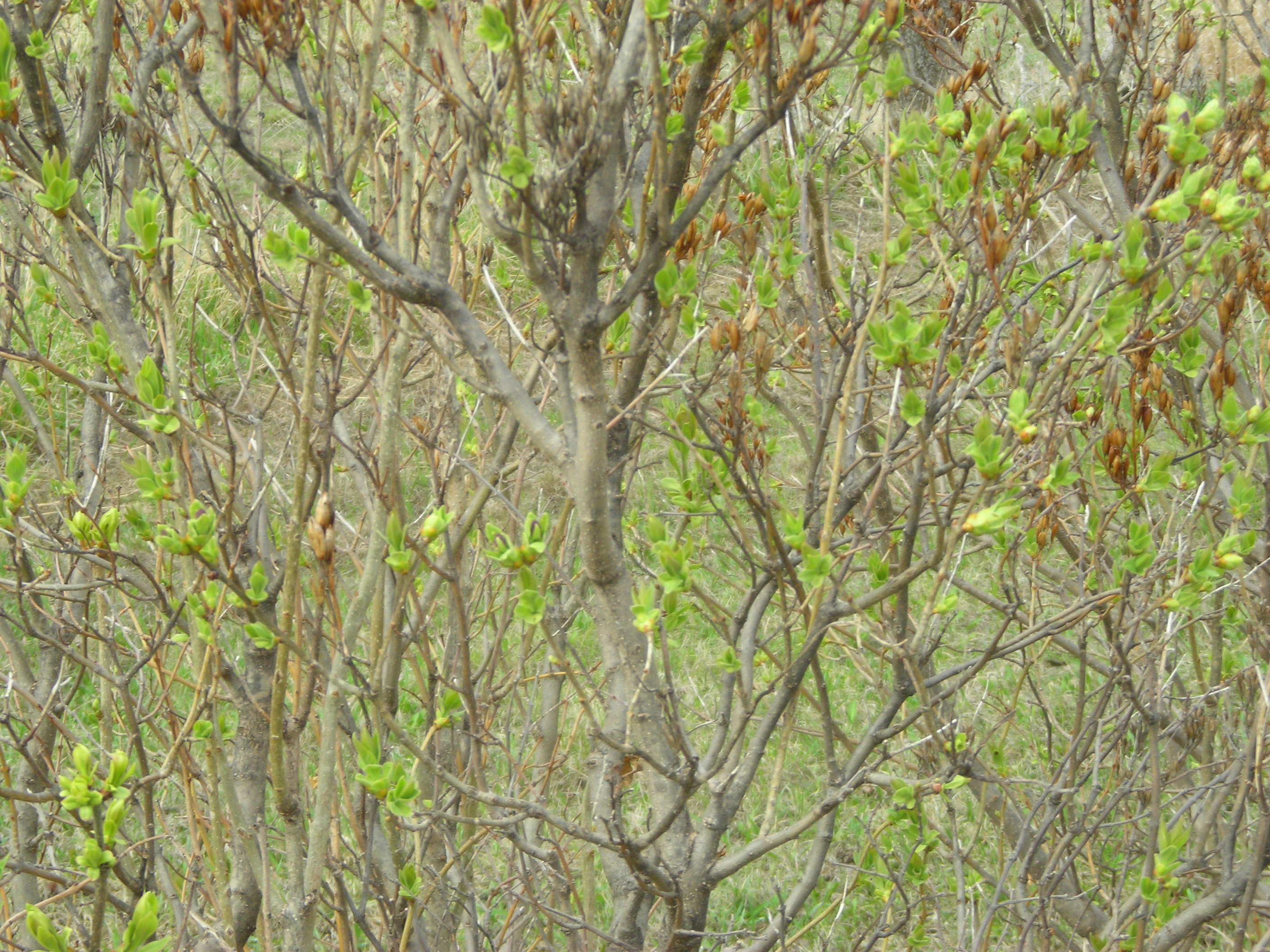
We seemed to notice each phase of green overtaking tan, of grasses rushing out of dormancy to full spring life.
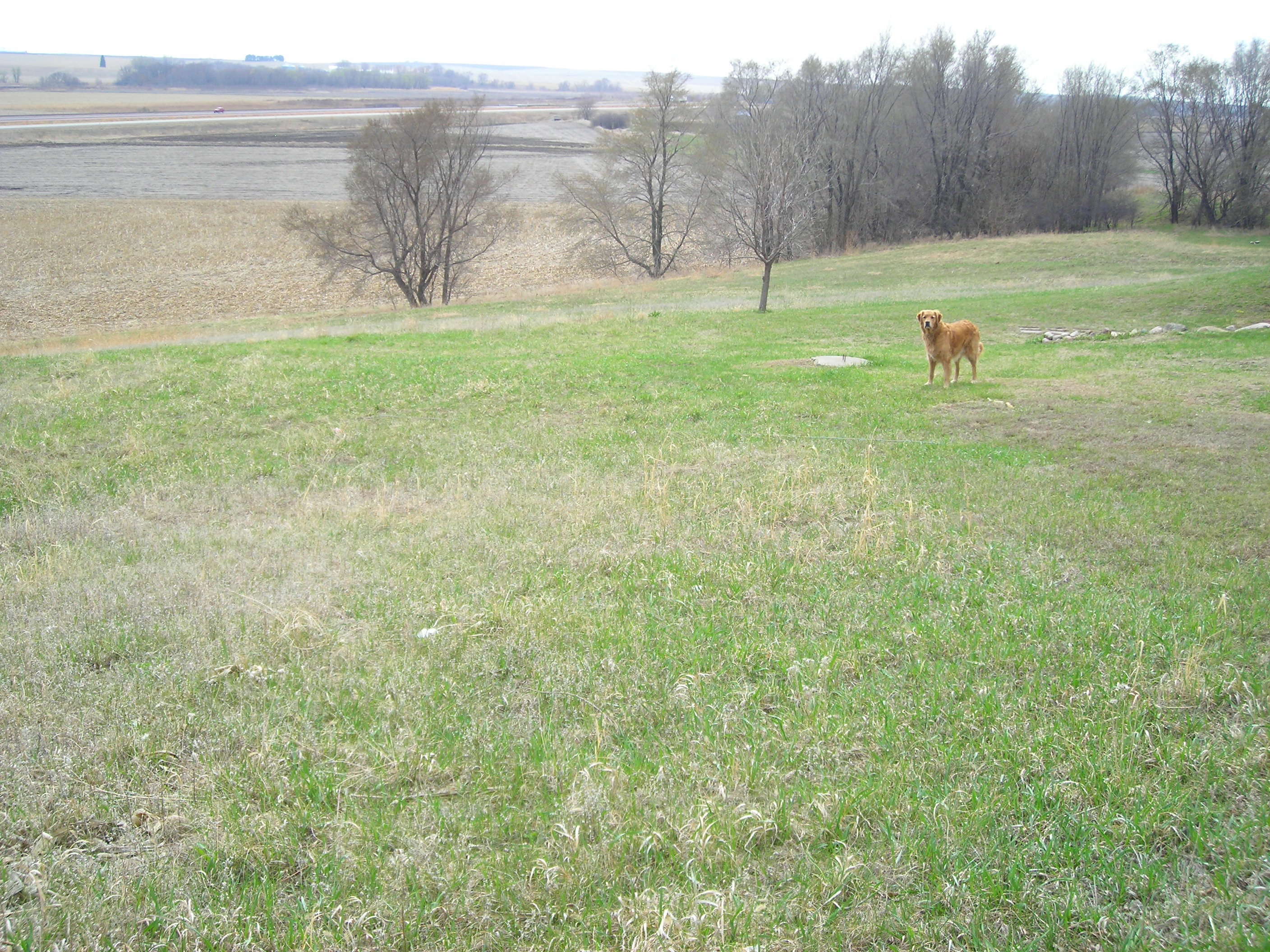
I swear I could see a difference in the depth of green from day’s beginning to day’s end.
Now we have small lilac bushes putting forth buds.
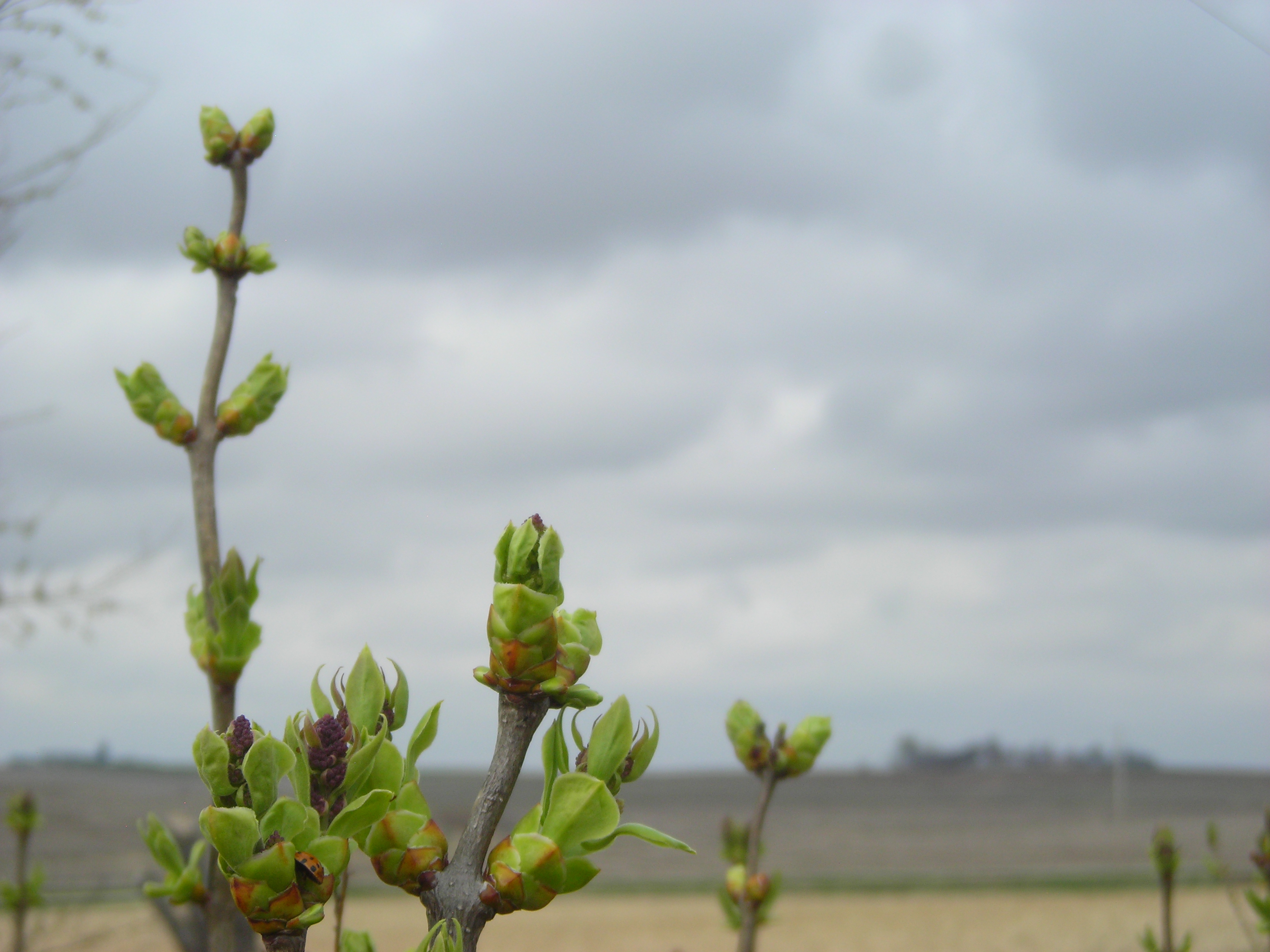

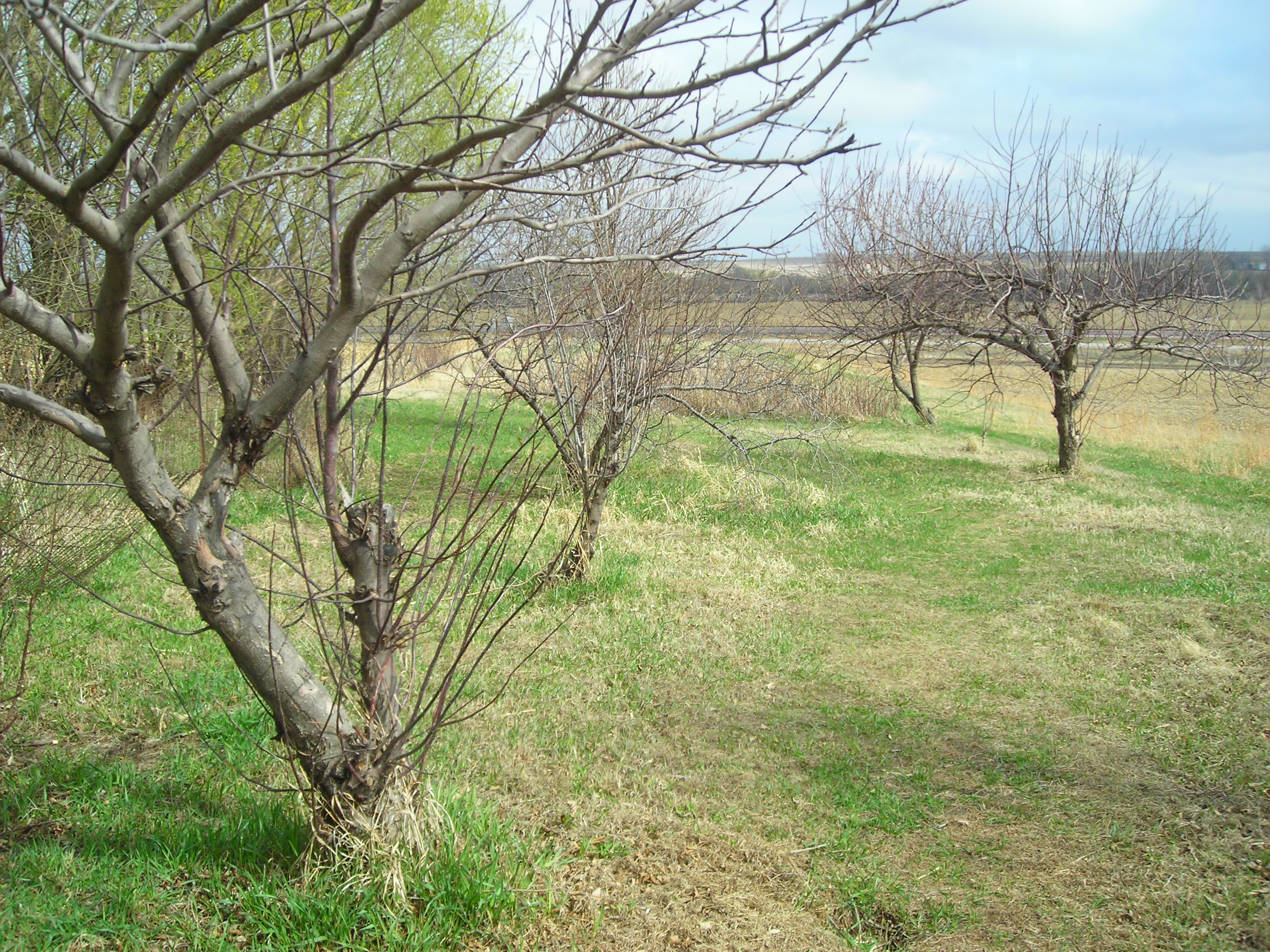
The trees in the orchard prepare for leaves. Flowers and fruit to follow.
The strawberry patch is dotted with merry saw-toothed leaves.

I smell dirt. The damp of grass. Inside we drink tea, but outside we abandon jackets. We wipe muddy paws, and leave shoes at the door.
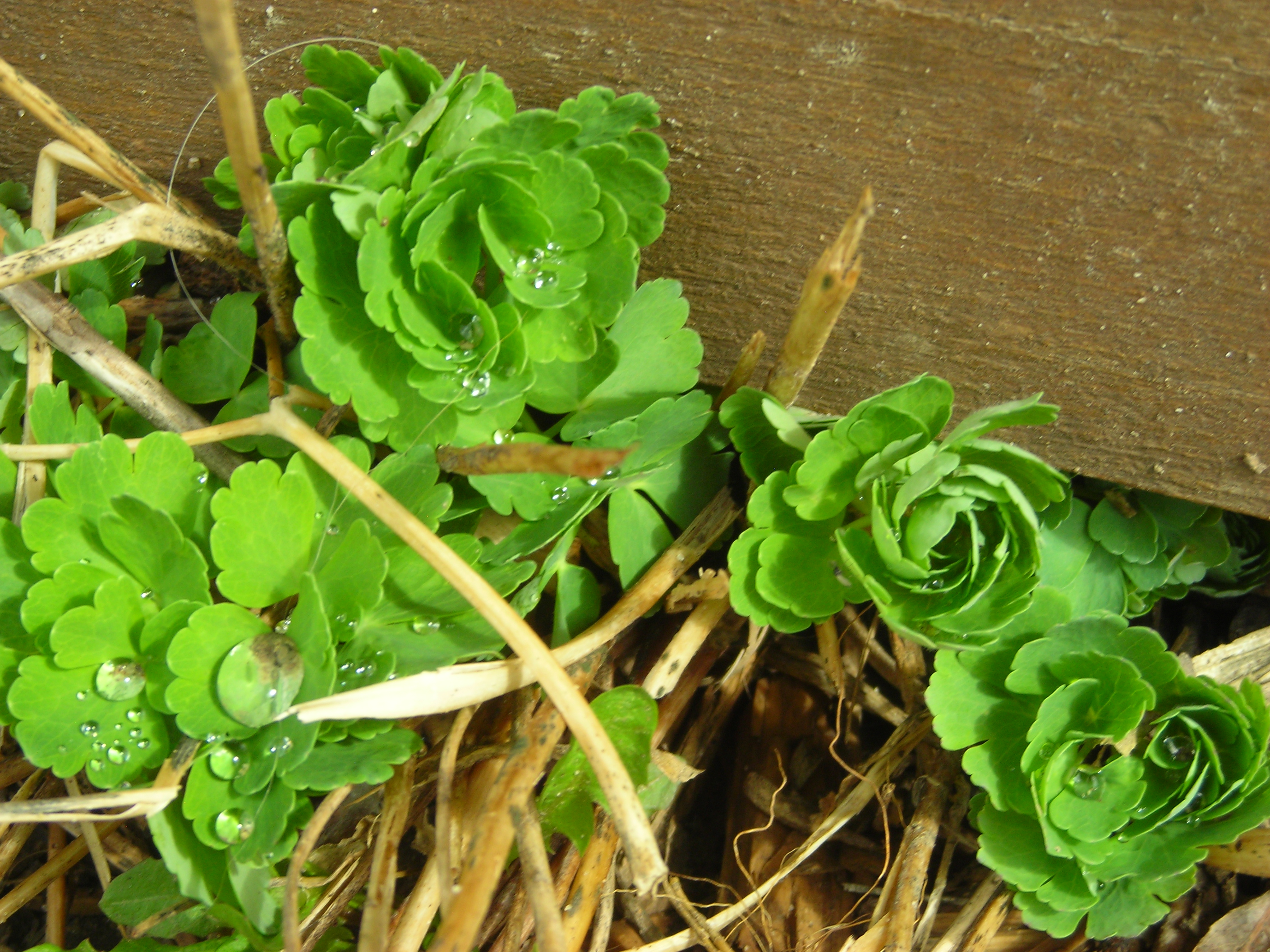
Spring.
Paradelle
February 22, 2012 § 2 Comments
Have you heard of this form? Poet Billy Collins made it up, to parody strict structured forms of poetry, with a footnote following his “Paradelle for Susan” that explains the rules for this (hardy-har-har) “French fixed form . . . of the eleventh century.”
I read the poem without at first realizing that he had made it intentionally awkward, though I did wonder about those dangling prepositions – because even while poetry lets you bend most grammatical rules, this was a bit much. I pointed these out to my mother (also a writer) and said, “Only Billy Collins could get away with that!”
I read the poem again and thought, How unnecessarily difficult!
And then I thought, I need to try it. I have liked writing sestinas, after all.
It turns out that while Collins proposed this form as a joke, subsequent poets have (a) not realized it and/or (b) decided to work with it, anyway. Red Hen Press has even published an anthology of paradelles that I’m curious to page through. So even if the revered Mr. Collins thinks this sort of thing is silly, the word nerd in me enjoys the puzzle, the playing with language.
Here’s some more info about the paradelle story and structure, and some examples: Paradelle, POA.
And here is my first attempt (feel free to give it the good ol’ workshop critique!):
—–
A Paradelle for Change
Where the bluebells end
Where the bluebells end
We come to the edge, laughing.
We come to the edge, laughing.
The end edge where we come
To the laughing bluebells
Is jagged, steep, a mile above
Is jagged, steep, a mile above
The river’s bending path.
The river’s bending path.
Above the jagged path,
Bending river, is a steep mile.
We fear not the gap. Hands hold
We fear not the gap. Hands hold
Together. We unfold our wings.
Together. We unfold our wings.
Our wings unfold, not fear. We, together.
The gap. We hold hands.
Where is the edge? The laughing
River’s mile gap above fear? We come,
We to the blubells, together.
A jagged,steep path. Not the end.
Hands bending, we unfold.
Our wings hold.
—–
Anyone else want to have a go? Send or link me to yours!
So love the world
February 14, 2012 § 1 Comment
Thanks to Darling Magazine for bringing a handful of world-reaching nonprofits, and the business No One Without, to my attention. And another way to think about what this day can mean.
Permaculture is . . .
January 27, 2012 § Leave a comment
Because yesterday’s film made me curious, I snooped around. Here’s what I found:
Permaculture is the conscious design and maintenance of agriculturally productive systems which have the diversity, stability, and resilience of natural ecosystems. It is the harmonious integration of the landscape with people providing their food, energy, shelter and other material and non-material needs in a sustainable way. -Graham Bell, The Permaculture Way
A few resources:
Gaia’s Garden: A Guide to Home-Scale Permaculture
Permaculture & Ecological Design Program (video below)
If you do a quick google search you’ll find many permaculture design courses and certificate programs out there. Ooh, I’m having that hungry-for-knowledge feeling, aren’t you?
Have any of you had experience with permaculture? Has anyone taken a course, gotten a certificate, or researched this approach to agriculture and living? I’d be eager to hear from you!
Human impact
January 23, 2012 § Leave a comment

Across the street they have been pushing the ground around into all sorts of piles and slopes for the past month or so. Big machines with their big noises. Now a crane stands tall against Colorado’s almost-always-blue sky. Apparently a church is going to be built there, though I won’t live here by the time it sees completion.
There is something in me that rebels against seeing landscapes so restructured. It feels innately wrong to push dirt around to make the land roll, or level, where it hadn’t been previously. Human impact. That’s what they call it, and though I know over the stretch of years nature has seen her share of change – I grew up where the Wisconsin Glacier moved, after all – still I am hesitant about the changes humankind likes to make.
And yet, I want to be a farmer. Farming, which is one of our most fundamental ways of disrupting nature, of putting our human desires and motives and needs into a landscape.
Am I a walking contradiction?
The answer, actually, is yes – sometimes – but perhaps not as much, on this issue, as I might first seem.
Here is the thing. There is farming with human profit (almost? always?) solely in mind. And then there is farming with ecology (and, particularly, soil health) in mind. While profit should remain important, in the kind of farming I want to do, it won’t be so important as to allow for ecological compromise. Profit must come within practices that respect and are guided by nature.

There is a nonprofit in California, just south of Santa Cruz, that I discovered in my early learning-about-sustainable-agriculture years. Wild Farm Alliance is dedicated to promoting farming that embraces the wild, or what is called “wild farming.” The organization operates on the idea that farming and wilderness need not be mutually exclusive – though it seems, at first glance, that they can’t help but be, and the recurring conflicts between farmers/ranchers and environmentalists only further such a conclusion.
But why shouldn’t they come alongside each other? Certainly a farm isn’t going to be an untouched wilderness, but neither need a farm be devoid of everything other than fencerow-to-fencerow crops and directly profitable commodities. I find it a beautiful challenge to consider how to integrate what nature wants to do within my plot of land and my region’s watershed, and my goals as a farmer.
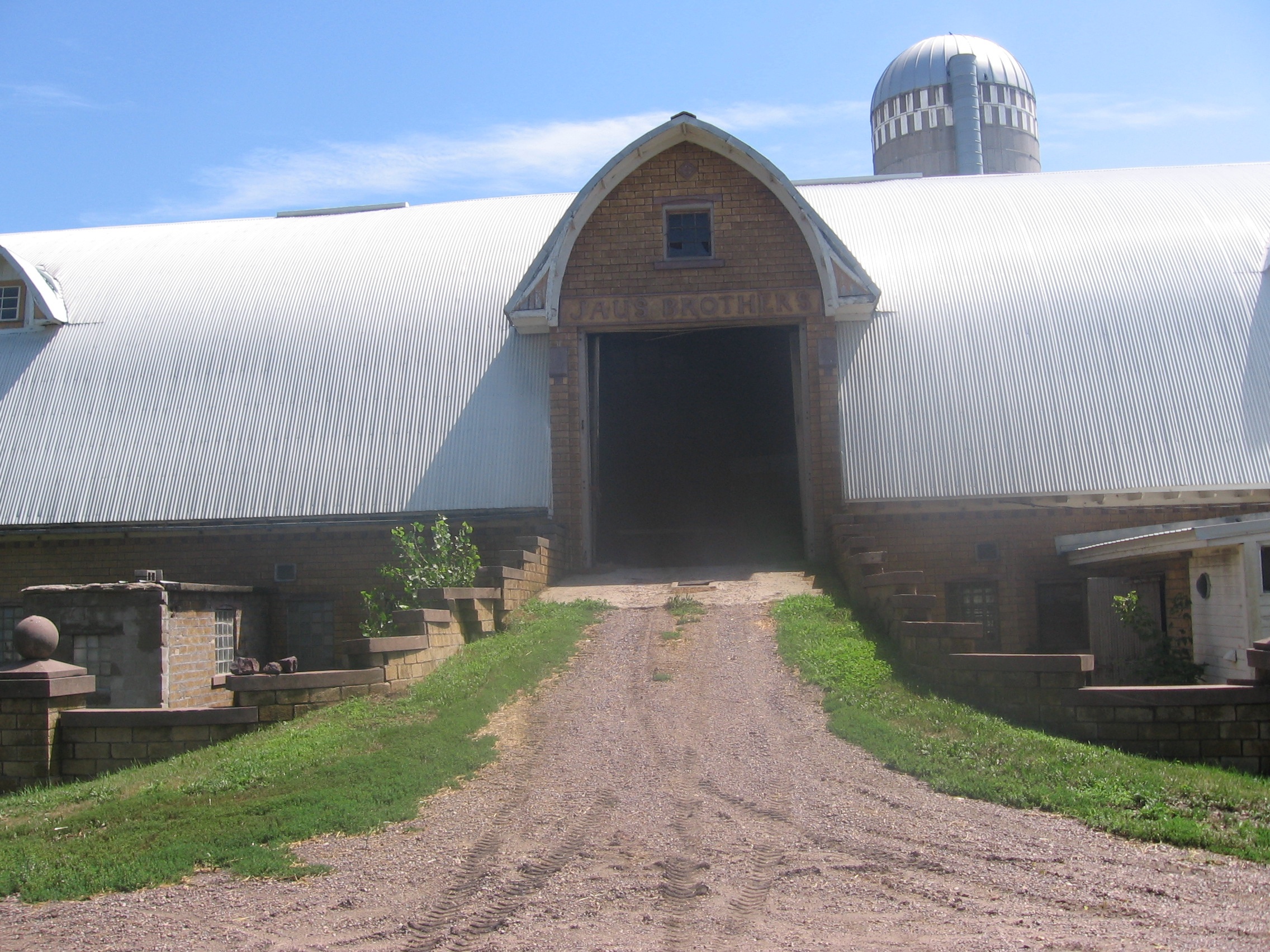
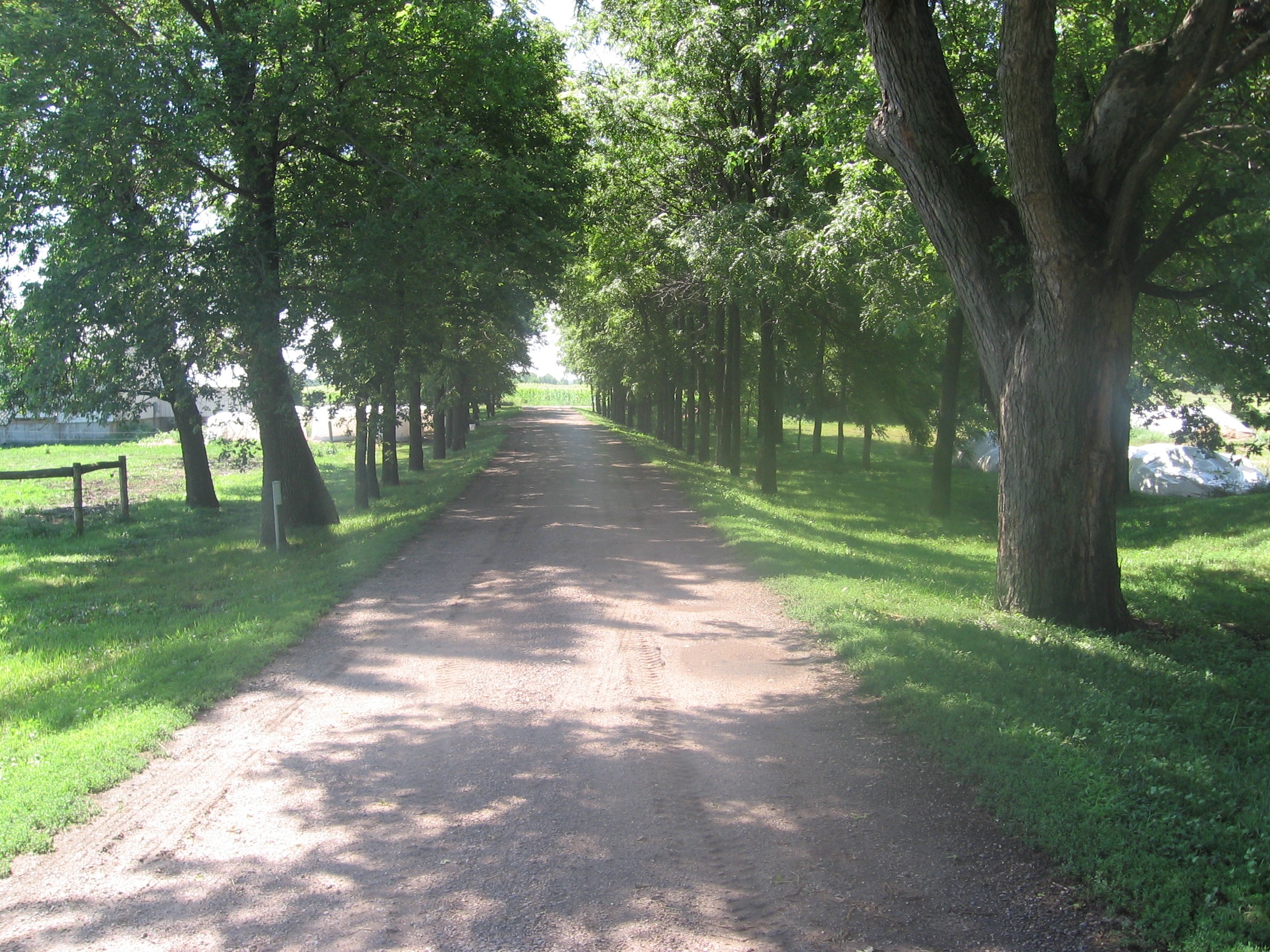
Several years ago I had the fun of spending a week on Martin and Loretta Jaus’ Holstein dairy farm in Gibbon, MN. Martin and Loretta are former wildlife biologists who’ve got a good grasp this wild farming concept. They have bluebird boxes on fence posts across their property. They have a an area set aside for a pond and wetlands. They have wild and native grasses in their pastures and ditches. Wildflowers turn up their faces and trees line the long lane. This farm is not only profitable, but diverse and alive. A pleasure to see, and wander through. It is not wilderness, but it most definitely has elements of the wild.

And do you know? Some of these things that seem as though they detract from profit – such as land set aside as opposed to being planted with corn and soybeans, thus reducing bushels harvested – actually benefit the farm. By providing natural habitat for beneficial insects, farmers can better keep pests under control without the use of strong pesticides. When a field contains a healthy mix of grasses and forbs, most ideally native varieties, the soil becomes healthier – better able to hold water and nutrients and maintain aggregate structure, thus avoiding erosion issues. By rotating areas that will be allowed to run “wild” for a few years, the farmer grants that land rest and time to revive itself. Topsoil is rebuilt rather than lost. These are not always immediate, $$$-in-the-bank profits, but they offer long-term benefits that contribute to a more sustainable farm and a more sustainable world.
And I must add – with my own personal penchant for beauty – that farms incorporating wild nature make for scenic countrysides. This is a great happiness on its own, but if we want to get into monetary matters, an aesthetically pleasing stretch of land has the potential to increase property values and/or tourism in the area. Which makes for a better economy. Right?
So. I suppose there will be, still, some land getting pushed around on my farm. But I hope it is done with a great respect for what nature has already made happen, an awareness of my own small importance, and an openness to look around at what I might see, and learn – and how I might adjust my actions accordingly.
This isn’t a post meant to judge. We all do what we have to do in certain situations, for a job or a family or some other reason. We operate on what we know, have been taught, and believe. And I admit I haven’t a clue what it means to be in landscaping or construction, or to have to actually support my family based on the way I run my farm (yet). I only know how I react to certain things, and I want to know why, and I want to see what I might do instead of, or in response to, these things – and how it all turns out.
The Greenhorns and the irresistible
January 21, 2012 § 1 Comment
Do you know about the Greenhorns, and their blog, The Irresistible Fleet of Bicycles? I have heard of them, on and off, over the past few years. And in my recent farm-dreaming and job-pursuing I came across them again and have subsequently been completely, delightfully drawn in.
In 2011, the Greenhorns released their documentary about the rise of, and challenges facing, young farmers. Here’s the trailer:
Has anyone seen the full film? What did you think? Does anyone else own it – or know where we can get a copy? Once I figure out where I’m living in the next few weeks, I’d very much like to host a film night/potluck. (Or persuade someone else to, and have them invite me.)
Oh, how I love this stuff! It always makes me feel that the world is good, and full of good people.
 Kinds of Honey